 alphavillenow
Analysis: Why 2026 is the “Golden Age of Space Sims
Retrace past greatness and step through the gateway to the boundless cosmos during an era where the space simulation gaming industry has soared to its absolute peak. 2026 has been truly crowned…
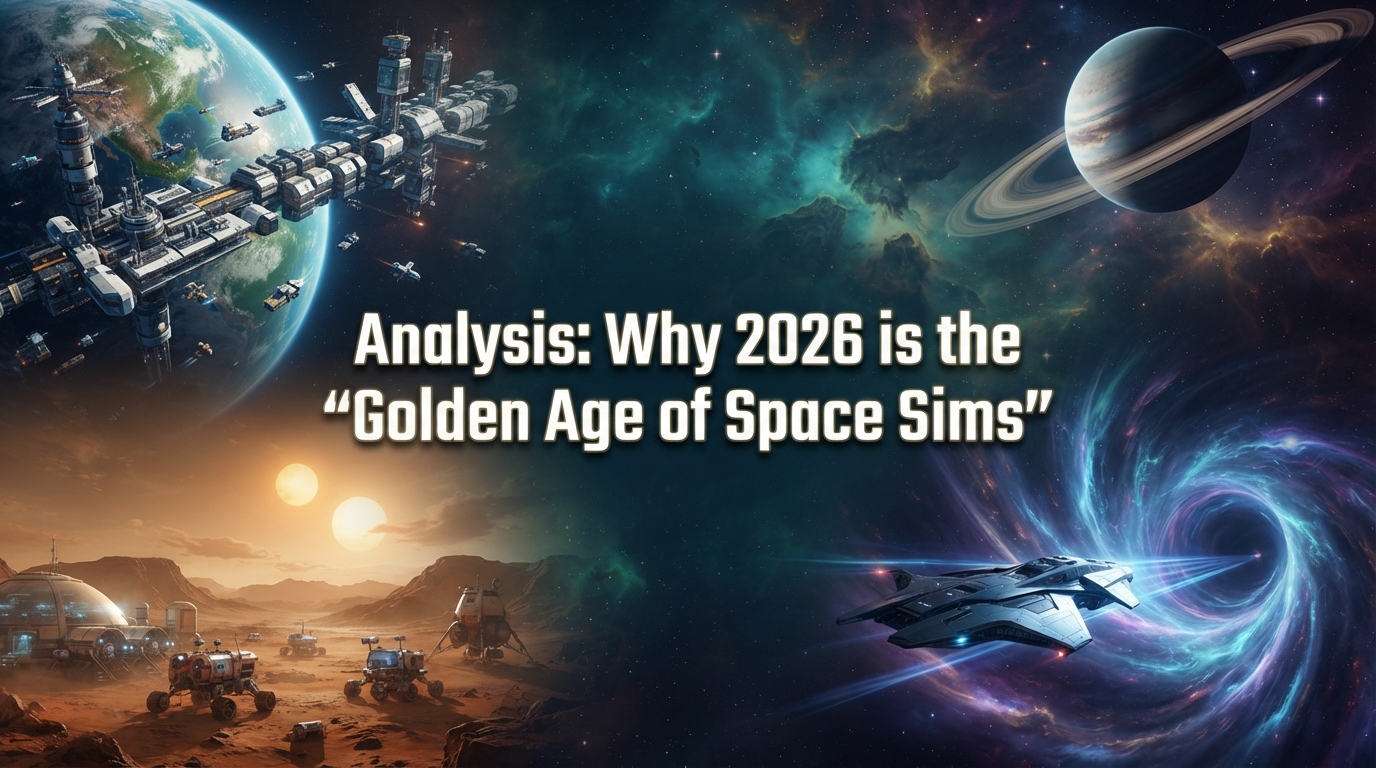
Retrace past greatness and step through the gateway to the boundless cosmos during an era where the space simulation gaming industry has soared to its absolute peak. 2026 has been truly crowned as the “Golden Age of Space Sims,” driven by world-class engine tech like Unreal Engine 5.5, the evolution of cooperative spacecraft systems, seamless open worlds, and hyper-realistic VR technology. This article takes you deep into every angle of why this year is a milestone sci-fi gamers cannot afford to miss. Prepare your pilot suit and read on for the full analytical breakdown!
Why 2026 Has Become a Major Milestone for Space Simulation Games Worldwide
The overwhelming popularity we see today is no coincidence. It is the result of a convergence between leaping advancements in game development technology and the boundless desire for freedom among players. The arrival of advanced graphics technology makes the simulation of solar systems, orbital physics, and planetary surface details so realistic that it is nearly impossible to distinguish between the real world and the virtual one.
As a gamer who has followed this genre for a long time, it is clearly palpable that many development studios have come to understand the true essence: players do not just want a simple space shooter, but rather a canvas to craft stories, build empires, and embark on adventures with friends across a vast, sweeping cosmic scale. This perfectly answers the call for the “Golden Age of Space Simulation Games” in every dimension.
The Driving Force of Technology and Community Reshaping the Space Sim Genre
The cutting-edge technology of today has completely shattered past limitations, whether concerning scene loading times or online server player density. Several key elements drive this trend from behind the scenes:
- The Power of Unreal Engine 5.5: Enables cinematic-level high resolution for planetary surfaces, space lighting, and warship models without sacrificing gameplay fluidity.
- The Evolution of Space Co-op Games: Empowers multiple players to divide duties in controlling large spacecraft—spanning propulsion, maintenance, and turret control—fostering strong bonds and tight teamwork.
- Player-Driven Economies: The profound depth of in-game marketplaces in Space Sims ensures that every business decision genuinely impacts the virtual universe.
Breaking Barriers with Seamless Open Worlds: From Planet to Space Without Interruption
One of the core reasons 2026 stands as a golden era is that most space simulation games have completely erased the boundary between “being on a planet’s surface” and “launching into space”:
- Zero Loading Screens: Players can pilot a spacecraft straight through a planet’s atmosphere and land on rugged surfaces instantly in real-time.
- Ecological and Climate Realism: Planets are no longer just barren plots of land; they feature distinct weather patterns, dust storms, and gravity variations that directly dictate ship handling.
A New Dimension in Crew Management and Interior Simulation
Space Sim games in 2026 no longer focus solely on piloting ships from an external perspective; they intensely zero in on lifestyle simulation and interior ship systems (Interior Simulation):
- Emergency Maintenance Systems: When a ship takes fire and the engine room catches flame or the hull breaches, players must physically grab tools and sprint to repair the damage themselves.
- Life Support Management: Regulating oxygen, electrical power, and fuel within the vessel becomes the beating heart of survival during long-haul journeys across star systems.
The Role of Procedural Generation and AI in Forging a Limitless Universe
The progression of procedural environment generation paired with artificial intelligence endows the universe of 2026 with a massive expanse and countless hidden secrets beyond what any single player could explore in a short span:
- Diverse Ecosystems and Organisms: Each planet is procedurally generated with unique flora and fauna.
- Dynamic Quests and Stories: Random cosmic events ensure that no journey ever repeats itself, infinitely boosting replay value.
The Influence of Virtual Reality (VR) and Accessible Cockpit Simulation Hardware
Virtual Reality technology and simulation accessories (like HOTAS—Hands On Throttle-And-Stick) in 2026 are exceptionally affordable and exhibit record-low latency:
- Peak Immersion: Slipping on a VR headset to sit inside a virtual cockpit and physically reaching out to flip the hyperdrive switch makes the sensation of being “lost in space” more lifelike than ever.
- Booming Gaming Gear Sales: The market for spacecraft simulation accessories surges alongside the popularity of the games themselves.
The Rise of Immersive Space Sims and Ultra-Realistic VR Hardware
Another crucial reason 2026 is a golden age is the fusion of high-fidelity simulation software with next-generation hardware, such as low-latency VR headsets and full-scale Haptic Feedback systems:
- True-to-Life Cockpit Simulation: Players can manually grip joysticks, hit switches, or tweak internal circuit panels inside the ship as if they were genuinely cast into deep space.
- Bridging Hardcore and Casual Gamers: Flight Assist modes are thoughtfully designed so novice pilots can relish planetary exploration without memorizing grueling physics equations.
The Deepening Impact of Crew Management Systems
Modern space simulation games care about more than just massive vehicles—they dive deep into the “lives of the crew” aboard, magnifying the pressure and immersion levels manifold:
- Internal Life Support Management: Oxygen, electrical power, and provisions are paramount. During emergencies like hull breaches or coolant explosions, players must scramble to execute real-time internal repairs.
- Bonds with Crewmates: With crew members possessing individual stat sheets, special traits, or fatigue levels, players must carefully plan routes and assign the right personnel to dangerous cosmic voyages.
Conclusion: The Future of Sci-Fi Gaming and Stepping Out Into the Cosmos
Stepping into the world of space simulation games right now is the absolute best timing, as mechanics have been refined for approachability while retaining a complete, hardcore challenge. Whether you fly solo or party up with friends, the universe of 2026 stands ready to welcome all pilots.
For anyone eager to kickstart their career as a space explorer, pick a title that matches your style, pack your bags, and embark on a journey alongside players worldwide. And before you launch, remember to stop by our homepage for more regular updates!
Summary Analysis: Why 2026 is the “Golden Age of Space Simulation Games”
- Overview of the 2026 Trend: The Space Sim genre is booming and growing exponentially, powered by cutting-edge graphic tech like Unreal Engine 5.5 and player demand for universe-scale freedom and empire-building.
- Core Driving Factors:
- Seamless Open Worlds: Erases barriers between planetary surfaces and space with zero loading screens and dynamic weather.
- Co-op & Crew Management: Cooperative ship control, emergency repair operations, and life support administration.
- Procedural Generation & AI: Boundless universes featuring dynamic ecosystems and quests.
- VR & Simulation Hardware: Low-latency headsets and haptic feedback gear providing elite cockpit immersion.
- Hardcore & Casual Balance: Flight Assist features welcoming newcomers without punishing physics barriers.
- Conclusion: The synergy of technology, community, and player-driven economies makes 2026 space sims a new benchmark of entertainment, offering ultimate freedom and deep immersion to gamers everywhere.
What kind of space simulation games do you think will dominate the market in the near future, and what features would you most like to see added? Share your perspectives and opinions with us!